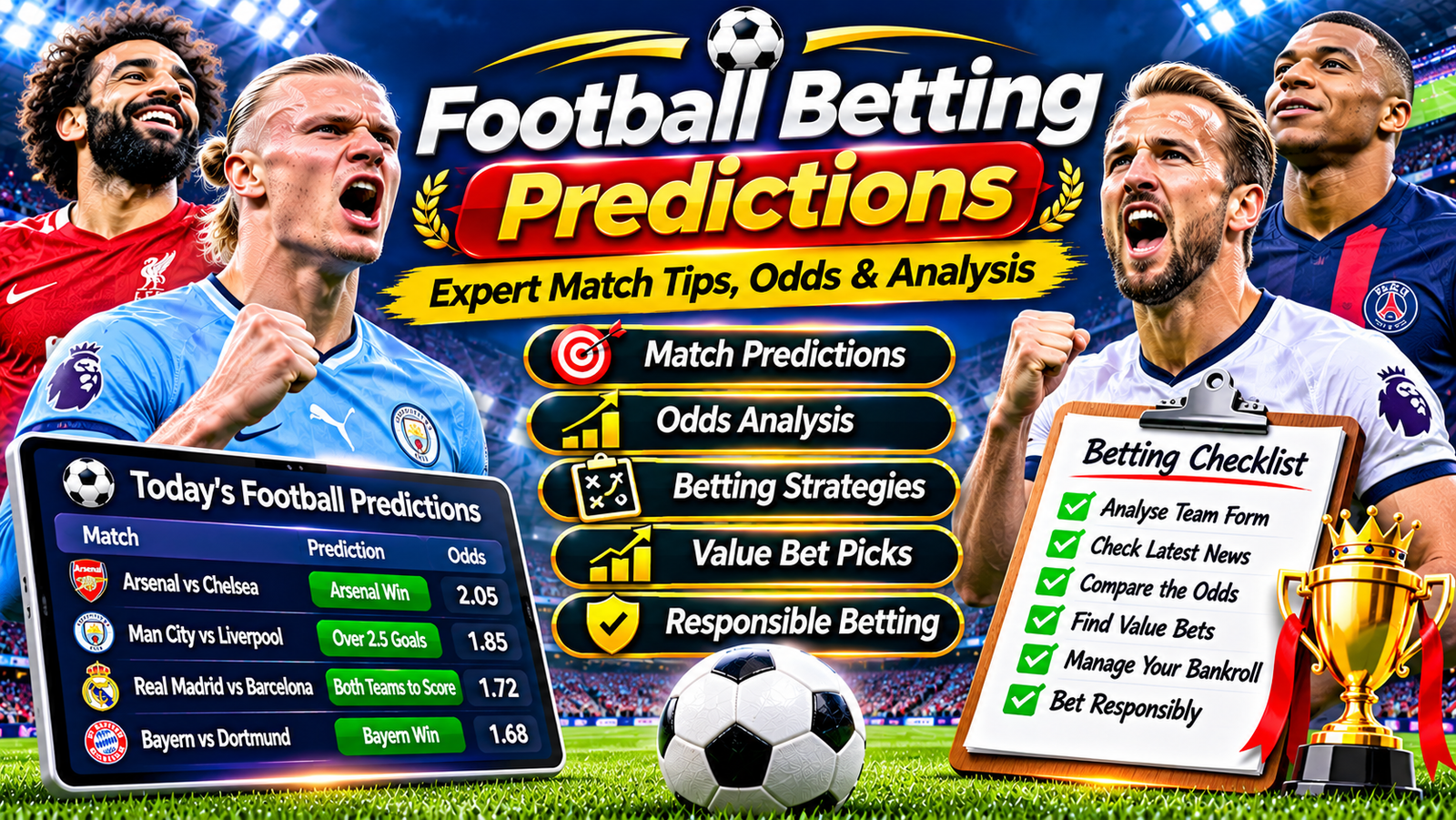
Start With Your Betting Goal and Budget
Before you search for selections, get clear on what you actually want from the market. Are you looking for a safer approach with smaller risk, or are you comfortable chasing higher payouts with more uncertainty? A defined goal helps you choose Football Betting Predictions the right bet type, whether that’s moneyline, double chance, or totals. Set a betting budget you can afford to lose and decide how many units you will stake per game so your plan stays consistent.
Next, translate your goal into a stake strategy. Many bettors make better decisions by using a tiered system, such as placing smaller stakes on conservative angles and larger stakes only when multiple conditions align. For example, if a team’s home record is strong but their scoring form is inconsistent, you may reduce exposure or switch to a market that matches your confidence level. This buyer-intent approach prevents impulse bets and turns your research into a repeatable process that supports long-term discipline.
How to Evaluate Match Data for Better Picks
Look at team form across similar match contexts, such as home versus away splits, and confirm that the underlying patterns match the upcoming opponent. Check goal profiles like expected goals trends, shot volume, and defensive efficiency, because these often explain results better than raw scorelines. If you only react to recent wins or losses, you can miss the tactical reasons those outcomes happened.
Then confirm the matchup through style and personnel. A team that presses high may struggle against opponents with quick build-up play, while a compact side can neutralize attacks that rely on wide service. Injuries matter most when they affect specific roles, such as a primary playmaker, starting center-back, or the main wide outlet. Also consider scheduling factors like travel and squad rotation, but treat them as secondary evidence that supports what the matchup and data already suggest.
Choose Bet Types That Match Your Confidence
Not every prediction deserves the same risk profile. If you see a clear edge in win probability, a straightforward moneyline can be the most buyer-friendly way to express that confidence. If the match looks balanced but you expect one side to avoid defeat, double chance bets often provide a smoother risk curve. Totals markets are useful when you identify goal expectation differences, but you should verify that both teams’ styles support the pace you’re betting on.
For higher-value opportunities, props and alt lines can target specific game scripts. For instance, if one team creates more high-quality chances, markets tied to shots on target or team totals can align with how the match is likely to unfold. Still, props require extra caution because they can be sensitive to game flow and referee tendencies. A practical method is to only consider special markets when your core thesis—tempo, chance quality, and defensive matchup—points in the same direction.
As you compare options, evaluate pricing and alternative markets rather than locking into one selection. If the odds drift against your view, it may be smarter to adjust the bet type or wait for a better number rather than stubbornly taking a worse price. Look for consistency between your data signals and the market’s implied expectations. When multiple angles agree—like defensive stability and controlled shot volume—you can justify stronger conviction and avoid overexposure in games where your confidence is only partial.
What to Look For in a Casino Review and Bonus Offer
When you’re also assessing casino options, remember that a “good deal” is only good if it fits your play style. Review the bonus terms for wagering requirements, max bet limits, and withdrawal conditions, because these directly affect whether you can realistically convert a promotion into balance. A buyer-intent guide should also clarify payout speed, game variety, and the quality of customer support so you know what to expect during gameplay. If a site buries important restrictions in long terms, assume you’ll spend more time navigating problems than enjoying the platform.
You should also evaluate how the casino handles transparency and fairness. Look for licensing information, clear responsible gambling tools, and accessible self-exclusion settings. Game catalogs matter too, especially if you enjoy slots with consistent volatility and clear bonus mechanics. If a review includes specific game examples, explain what makes them appealing—such as payout structure, feature frequency, and bonus buy behavior—so you can judge whether the casino matches your preferences rather than choosing blindly.
Conclusion
A strong buying decision in sports betting comes from aligning your bankroll, your match analysis, and your bet type. When you treat research as a process—starting with a clear goal, verifying matchup details, and only then selecting markets—you reduce the chance of chasing outcomes that don’t match your thesis. This approach also supports responsible gambling because you’re more likely to stick to your plan when results fluctuate. Use casino reviews the same way you use match research: focus on the terms, transparency, and real player experience. A platform that offers fair rules, helpful support, and responsible tools is easier to manage when you’re betting responsibly. By combining disciplined match evaluation with smart platform selection, you can make decisions with better clarity and stronger long-term odds.