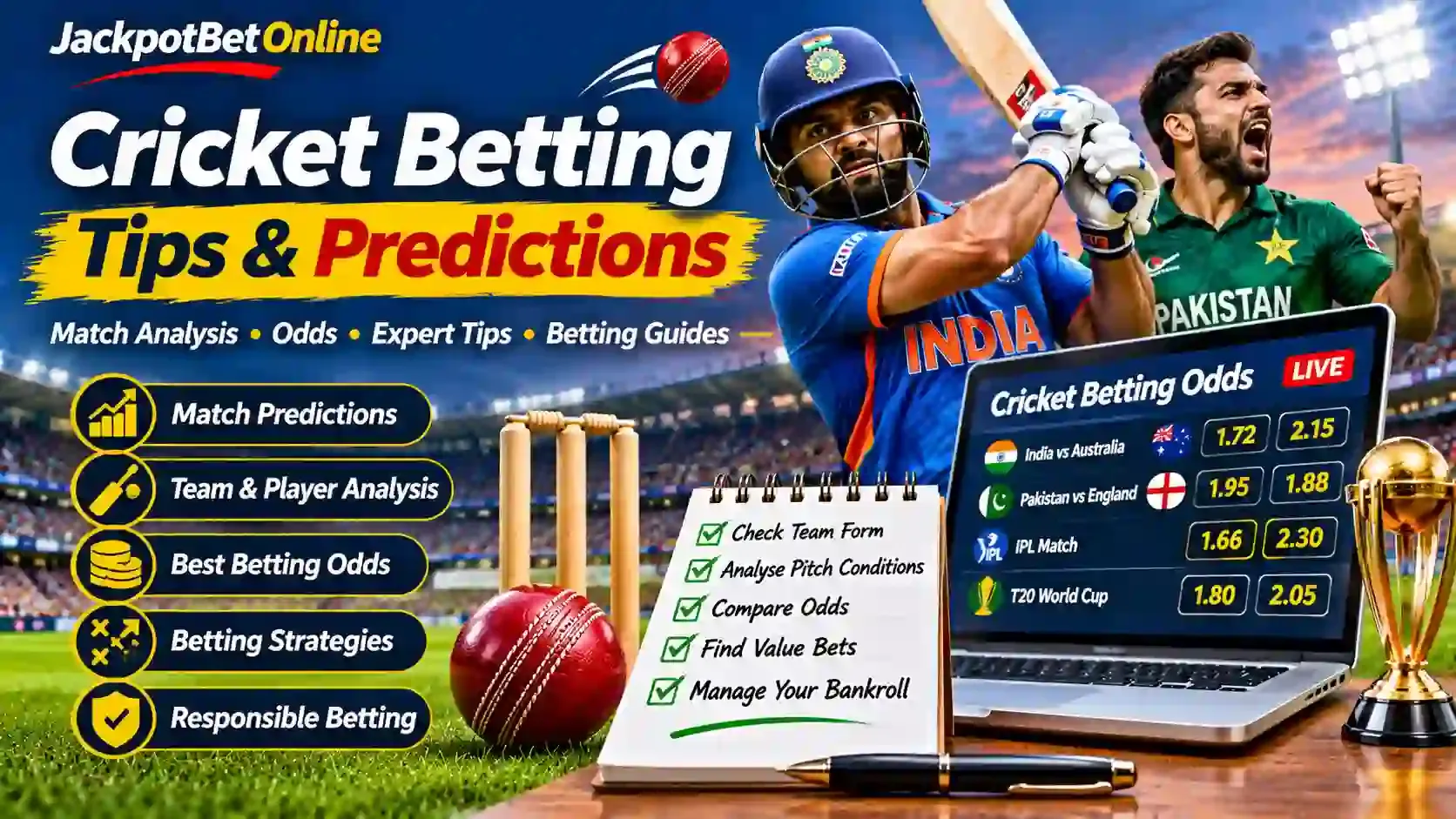
Pre-Match Checklist: Research Before You Bet
Start by verifying the basic match details and tournament context so you can map the right betting markets to the right format. Confirm whether it’s a Test, ODI, T20, or domestic league, because scoring patterns and risk levels differ dramatically by format. Then review both squads for confirmed Cricket betting tips playing XI, not just probable lineups, since one late change can swing powerplay plans, batting order, and bowling matchups. Finally, scan for any verified injury or workload notes that affect key roles like opening batting, death overs bowling, or frontline spin.
Next, build a quick form and conditions snapshot that you can reference while the game is unfolding. Compare recent performances in similar venues rather than relying on generic “good streak” narratives. Look at head-to-head results carefully, but treat them as context instead of proof, especially when squads or captains have changed. Then check pitch behavior indicators such as expected pace off the surface, likelihood of grip for spinners, and whether dew could influence the chase.
Use a simple checklist to assess matchups that often decide outcomes in cricket. Identify whether one team has a clear bowling plan for powerplay overs, and whether the other side has multiple reliable scoring options early. For batting, evaluate whether the top order has stable partnerships or frequent wicket-taking phases, such as a pattern of collapses after a breakthrough. Also consider fielding impact by noting teams with stronger boundary riders, especially in leagues where catching and run-outs can quickly tilt close totals.
Before you place a bet, define what you’re actually betting on: a result, a player role, or a run-based target. “Match winner” bets depend more on overall balance, while player and totals markets depend more on role clarity and game script. This distinction helps you avoid the common mistake of treating all bets as if they share the same risk profile. If you can’t explain why your selection makes sense, pause and tighten your reasoning using the rest of this checklist.
Market Checklist: Choose the Right Bet for the Game Script
Start with the match outcome markets, but only after you’ve reviewed the conditions and team composition. If the pitch is expected to slow down, the side with deeper batting and better spin handling often becomes more attractive for result-oriented wagers. If the surface favors pace and early swing, focus on teams with strong opening defenses and bowling depth in the first half of the innings. For T20, where momentum shifts rapidly, consider whether both teams have realistic paths to score under pressure.
Then move to player markets like top batsman and top bowler, using role-based reasoning rather than reputation alone. For top batsman bets, check batting order, expected number of overs faced, and how frequently a player converts starts into longer innings. For top bowler bets, assess whether a bowler is likely to bowl in high-leverage overs such as the powerplay, middle overs, or the death overs. Also examine whether bowling changes due to dew or tactical matchups could reduce overs for certain bowlers.
For total runs and over/under markets, confirm your assumptions about innings momentum and wicket probability. Look for signals such as how often teams in similar conditions post totals above or below their recent averages. If a chase is likely to be affected by dew, you may see different run-rate behavior in the second innings compared to the first. Consider whether the match is likely to be curtailed by weather interruptions, as that can shift the value of certain run lines.
Don’t ignore partnership markets like opening partnership or highest opening partnership, especially in formats where early wickets decide the chase. If one team’s openers are strong at rotating strike, they may keep run rates steady even when wickets fall elsewhere. If the other team’s new-ball bowlers have a clear plan to pressure edges and force mistakes, partnership markets can become higher risk. The goal is to pick the market that fits the most likely game script, not the one that looks exciting.
Stats Checklist: Validate Form, Matchups, and Player Impact
Use a “signal vs. noise” approach when checking stats. Look for repeatable indicators such as average and strike rate in the specific format, plus performance in similar pitch types, rather than one-off high scores. For bowlers, focus on economy rate trends and wicket quality, including how often they take stumps and induce dismissals rather than just conceding runs. If a batter’s scoring relies on a narrow set of shots that fail on certain surfaces, that mismatch can show up in venue-specific data.
Cross-check head-to-head data with squad reality. If key players changed since earlier meetings, the old matchup may be less relevant than the current team’s skill set and tactics. Also evaluate who had the advantage in past matchups due to conditions, not just talent, because pitches can override even strong historical patterns. When you find a favorable stat, ask whether it’s supported by current role certainty like consistent batting position or a defined bowling quota.
Make sure your checklist includes performance under pressure. For batting, search for indicators such as late-innings scoring or the ability to handle spin during consolidation phases. For bowling, review how bowlers perform after conceding early runs, because recovery ability impacts middle-overs control. In T20, where one over can swing the match, the “response to setbacks” stat can be more actionable than pure averages.
Player impact also depends on team balance, not just individual talent. A team may have strong top-order batsmen but lack reliable finishers, which changes the value of top batsman and innings total bets. Likewise, a bowling attack with only one strike bowler might struggle if that bowler is targeted consistently. Use your checklist to connect individual skills to team execution, since that link often explains why a bet wins or loses even when surface-level stats look similar.
In-Play Checklist: Manage Risk With Live Decisions
Once the match starts, avoid “set and forget” behavior by monitoring how the game is actually unfolding. Track opening partnership pace, early wicket types, and whether field placements suggest aggressive acceleration or cautious consolidation. If early wickets fall due to misreads rather than skill gaps, the betting value can shift quickly because the batting side may still have stable players. Conversely, if wickets fall repeatedly through the same weakness, the downside for totals and batting markets may increase.
When using live betting, confirm that the market you’re entering reflects new information rather than emotional reactions. For example, a sudden batting surge can be temporary if the batting side is only surviving due to dropped catches or poor bowling lines. On the bowling side, if a bowler is getting rhythm and hitting the right lengths, top bowler and over-based markets can become more credible. Always compare your live entry price to your own expectations built from the pre-match checklist.
Use a risk-management checklist to keep control when odds move fast. Decide before kickoff how much exposure you’re comfortable with, and avoid chasing losses by increasing stake size. If your original selection is invalidated by pitch changes or lineup updates, it’s better to step back than to force the bet. Also consider whether you have multiple correlated bets, such as matching totals and player markets that depend on the same batting stability.
Finally, keep an eye on practical signals that affect cricket outcomes, like dew influence on ball grip and whether batters are adjusting their shot selection. In T20, small tactical shifts like bringing a powerplay overs strategy into later phases can change run-rate expectations. Weather and interruptions can also reshape target calculations, so be ready to reassess any innings total or over/under lines. Your goal is to use live info to improve decision quality, not to gamble blindly.
Conclusion
By verifying lineups, reviewing conditions, and matching markets to the most likely game script, you reduce the chance of betting on assumptions. Use the checklist to connect squad roles, pitch behavior, and player impact, rather than relying only on headlines or reputation. This approach helps you evaluate uncertainty and make more disciplined wagers across formats. Remember that no bet is guaranteed, and responsible wagering matters in every match. Treat each selection as a learning opportunity by tracking whether your pre-match reasoning matched what happened on the field. If a bet loses, review which checklist step failed—was it pitch misreading, a lineup change, or overconfidence in statistics? With consistent process and careful risk management, your cricket betting decisions can become clearer, calmer, and more informed.